Contents
Taking care of your child's oral health should start as early as possible. Instilling good oral hygiene habits is crucial for the long-term health and appearance of your smile. Another extremely important factor for healthy teeth and a beautiful smile is regular visits to a pediatric dentist.
Preventive examinations are key to oral health and early detection of dental problems. In some cases, emergency visits to the pediatric dentist are also necessary. In this article, we will look at eight reasons that clearly indicate that children should visit a dentist as soon as possible.
When is it necessary to take a child to the dentist?
Toothache

Regardless of the patient's age, a toothache is the clearest sign that a visit to the dentist is needed. The professional dental examination is the best (and often the only) way to determine the source of the pain. A toothache is an indicator that a child may have caries, broken tooth or some other dental problem. The situation will only get worse if medical attention is not sought. In case of severe pain, the child should be taken to an emergency pediatric dentist immediately.
Sensitive teeth

If a child experiences unpleasant sensations when eating hot or cold food (for example, ice cream or hot soup), it is most likely due to sensitive teethSensitive teeth are often a sign of tooth decay. In such situations, medical attention should be sought as soon as possible to determine what is causing the tooth sensitivity and, if tooth decay is present, to begin its timely treatment.
Stains on teeth or discolored teeth
Teeth stains and yellowing occur when oral hygiene is not adequate. Brushing your teeth twice a day and flossing once a day is mandatory to prevent yellowing of baby teeth. If the tooth turns gray, brown or black, it is most likely a case of tooth decay. In this case, prompt professional help is very important, as tooth decay can progress very quickly. Tooth discoloration is also a sign of a dental problem and should not be underestimated.
White spots on teeth
White spots on your teeth are also an indication of a dental problem. White spots are usually caused by excessive fluoride exposure. However, they can also be related to damaged enamel or be an early sign of tooth decay.
Swelling and bleeding gums
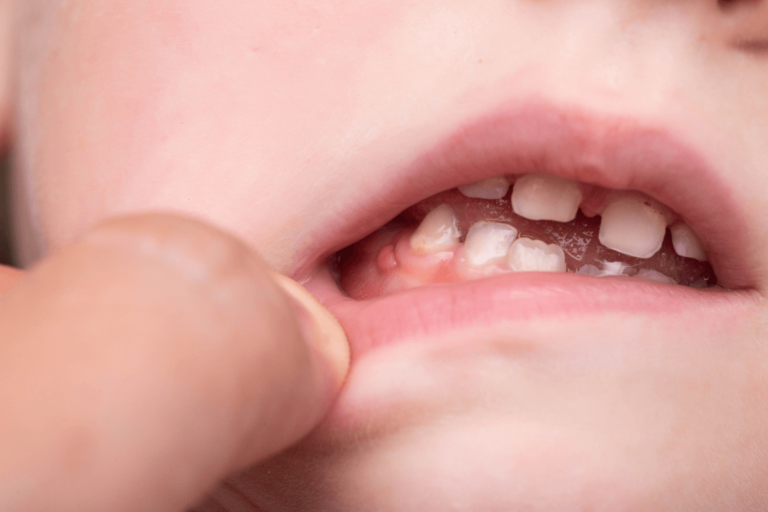
Inflammation and infections are usually the main cause of swelling and bleeding gums in childrenPlaque buildup irritates the gums and can lead to gingivitis or the loss of permanent teeth. Untreated gingivitis leads to an increased risk of periodontal disease in the future.
Persistent bad breath

Eating certain foods or having a dry mouth can cause temporary bad breath. However, persistent bad breath is a serious cause for concern. It is one of the early signs of tooth decay, gingivitis, or gum disease.
Jaws clicking when chewing
If your child's jaw makes a strange popping or clicking sound while chewing, it could be a sign of a dislocated jaw or temporomandibular joint disorder (TMJ disorder). Jaw misalignment and bite problems (overbite or underbite) can cause discomfort, speech problems, difficulty chewing, and tooth decay. To correct this problem, your pediatric dentist may recommend orthodontic treatment.
They suck their lips.

Some children develop a bad habit of sucking their lips, placing their lower lip between their upper and lower teeth and sucking on it. This bad habit can have a negative impact on dental health. Tongue-tipping and thumb sucking can also lead to malocclusion. If such bad habits are present, it is a good idea to seek professional medical help.
Pediatric dentistry in our clinic
At Specialized dental clinic Bushkalova We have specialists in pediatric dentistry for whom working with young patients is a calling. We have a modern facility and state-of-the-art equipment combined with high expertise. In the clinic we perform treatment of caries with high-energy dental laser and we do consultations with parents, on how to maintain good oral hygiene for their children.
If your child has any of the problems listed above or you simply want to learn more about oral hygiene, contact us to schedule an appointment for an examination or consultation.
The first preventive examination should be done after the child turns 2 years old and from that moment on, preventive examinations are carried out every 6 monthsWhen the child has already been treated and this treatment has ended, preventive examinations are performed every 4 months.