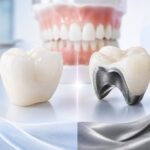
Dental crowns and bridges are the key to restoring and protecting natural teeth. Their use is usually resorted to when there is serious trauma to the teeth, so it is good to make an informed decision about which type of crown is best for you. For decades, metal, ceramic, and metal-ceramic crowns and bridges were the primary options, with each alternative having its strengths and weaknesses.
Dental medicine is constantly changing and improving, and in recent years a new material has become necessary, which combines the positive sides of metal and ceramic – and that is zirconium. Zirconia crowns and bridges are made of zirconium dioxide, which is a naturally white material similar to titanium.
Advantages of zirconia crowns
Strength and endurance

Few people are aware of the force exerted by the molars during chewing. It is therefore very important that dental restorations (crowns and bridges) can withstand this daily stress and wear. Zirconium does not crack or chip and has exceptional durability. Because of this, most experts claim that there is currently no stronger material for making dental crowns and bridges.
Aesthetic appearance

Zirconia is a metal alloy, but it still achieves amazing aesthetic look. This is one of the reasons why they are often classified as ceramic crowns, as they look much more like them. Traditional metal crowns do not have a good aesthetic appearance and are clearly visible even when placed on the back molars. Zirconia is naturally white and translucent, just like natural tooth enamel. Therefore, the use of zirconia crowns and bridges results in a naturally beautiful and white smile.
Flexibility
Zirconium crowns are very flexible and easy to process. Therefore, a perfect aesthetic and functional appearance of the crowns can be achieved very easily and quickly. Even after the zirconia crowns are placed, they are relatively easy to handle. The dentist can adjust the shape or shade of the crown without having to send it back to the lab for adjustments. Also, the crown can be adjusted and repaired over time instead of being replaced. For example, if the color of your teeth changes over time, the color of your zirconia crown may also change to have an aesthetic match.
Comfortable and precise

Like ceramic and zirconium crowns, they are made using precise impressions taken from natural teeth. Once they have an impression, dental technicians make crowns and bridges to fit perfectly. Even if there is a slight discrepancy, a correction can be made very quickly and easily. Zirconium crowns look, feel and function just like a natural tooth.
Biocompatibility
Zirconium dioxide is extremely biocompatible, meaning it is very unlikely to be rejected by the body or trigger an immune response. The body treats biocompatible materials as if they were part of it. Therefore, zirconium rarely causes an allergic reaction, even if you have a metal allergy. This makes it a great choice for people who develop allergic reactions to certain materials.
Stain resistant

In addition to being incredibly strong and durable, zirconia crowns are also stain resistant. They are actually more resistant to staining than your natural teeth. This is a guarantee that this type of restoration will remain bright and white for a long time. However, another problem arises here. Since natural teeth stain more easily, you should limit your intake of dark foods and drinks, as at some point there will be a mismatch between the color of the crown and the natural teeth.
Less filing of natural teeth

The strength of zirconia means that zirconia crowns can be thinner without compromising their strength. This means that the dentist files off a smaller portion of the natural tooth to achieve the restoration. For long-term oral health, it is always better to retain as much of the natural tooth structure as possible. This is yet another way that zirconia crowns support and protect future dental health.
Resistant to temperature changes
In general, metal is sensitive to temperature – it expands at high temperatures and contracts at low temperatures. As a result, traditional metal crowns put more stress on natural teeth, which can lead to cracks and injuries. They also cause other problems such as tooth sensitivity. However, zirconia is resistant to temperature changes and therefore zirconia crowns will not crack under temperature amplitudes.
Versatility

Most types of dental crowns can be used to restore any tooth, but some are more aesthetically pleasing than others. Metal crowns, for example, are not a good option for front teeth because they are very distinctive and disturb the aesthetics of the smile. Crowns made of less durable materials are not suitable for molars, as the load is much greater there. Zirconium crowns are both durable and aesthetic. They are flexible enough to be placed on any tooth that needs to be protected by a crown. Zirconia crowns bring the long-lasting durability and beauty of a natural tooth.
Durability
The strength, durability, temperature resistance and stain resistance make zirconia crowns extremely long-lasting. Regular oral care and good hygiene habits will extend the life of the crowns even more. Good hygiene means brushing your teeth at least twice a day and flossing at least once a day. With proper care, a zirconia crown should last 10 to 15 years, although it has the potential to last longer.
Conclusion
After the facts stated above, it is clear why zirconia crowns are gaining more and more popularity – they have combined the best of the other types of crowns. The strength and durability of metal crowns with the flexibility and aesthetic appeal of ceramic crowns. Therefore, zirconium crowns are also used for severely damaged teeth, protecting them for years to come. If you need a restoration with crowns and bridges or want to learn more about what types of crowns and bridges it offers Specialized dental clinic Bushkalova, do not hesitate to call and schedule an appointment for a review and consultation.