The toothbrush can't reach some areas where the teeth meet the gum line! Therefore, flossing is recommended for excellent oral hygiene!
Everyone knows that teeth should be brushed with a brush and toothpaste at least twice a day. However, oral hygiene cannot be top-notch if you don't floss. Flossing gets between the teeth and around the gum line in a way that toothbrush bristles cannot. It removes food stuck in hard-to-reach places, thereby reducing the risk of caries and pulpitis.
Most people don't know how to properly floss. This article aims to do just that – to teach you the proper techniques for flossing.

What is the correct way to floss?
First of all, you need to know how to floss correctly, and only then proceed to cleaning. First, prepare a piece of thread about 50 cm long and wrap a larger part of it around your front fingers. There should be at least 5 cm of clean floss for cleaning each tooth. It is very important that each tooth is treated with a new and clean section of floss.
There are two main types of dental floss – waxed and non-waxed. Studies show that there are no significant differences between them and it is a matter of personal choice and comfort which of the two you choose. However, if you have braces, waxed floss is a better choice as it is less likely to snag or break than non-waxed floss.

Here are the steps for proper flossing:
1. Prepare the thread – you need 50-60 cm of floss, which you need to wrap tightly around your middle fingers, leaving about 5-6 cm of clean surface to clean each tooth. Do not wind the thread too tightly, so as not to stop blood circulation in the fingers.
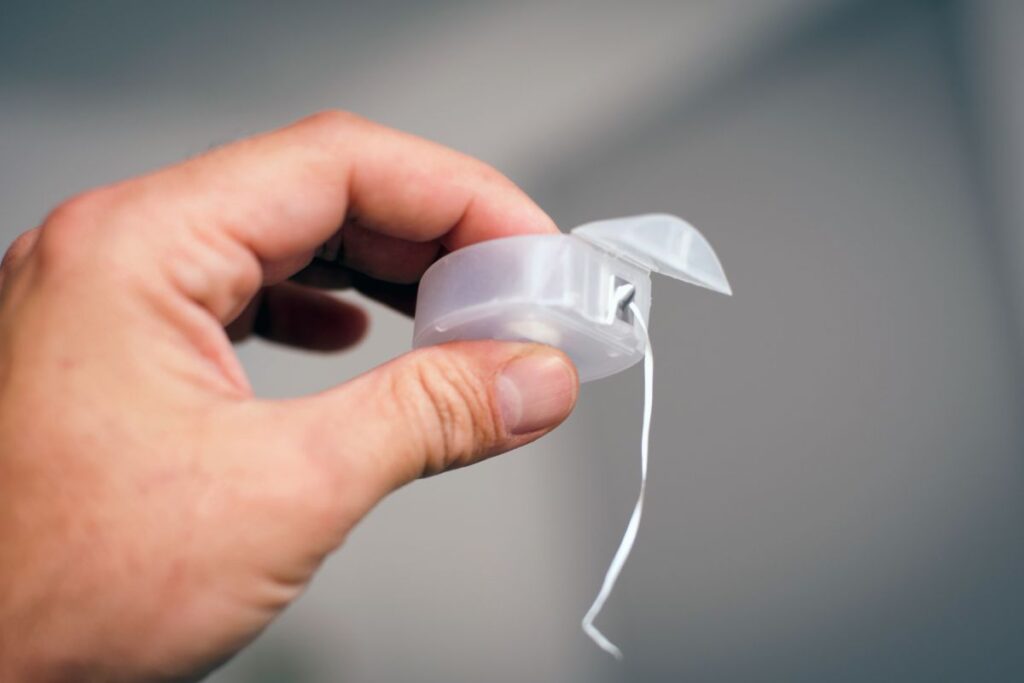
2. Pinch the ends of the clean part of the thread with your thumb and forefinger (those 5-6 cm) with which you will clean the tooth. For each tooth you need to provide a new clean part, so after cleaning each tooth you need to unwind and wind a certain part of the floss.
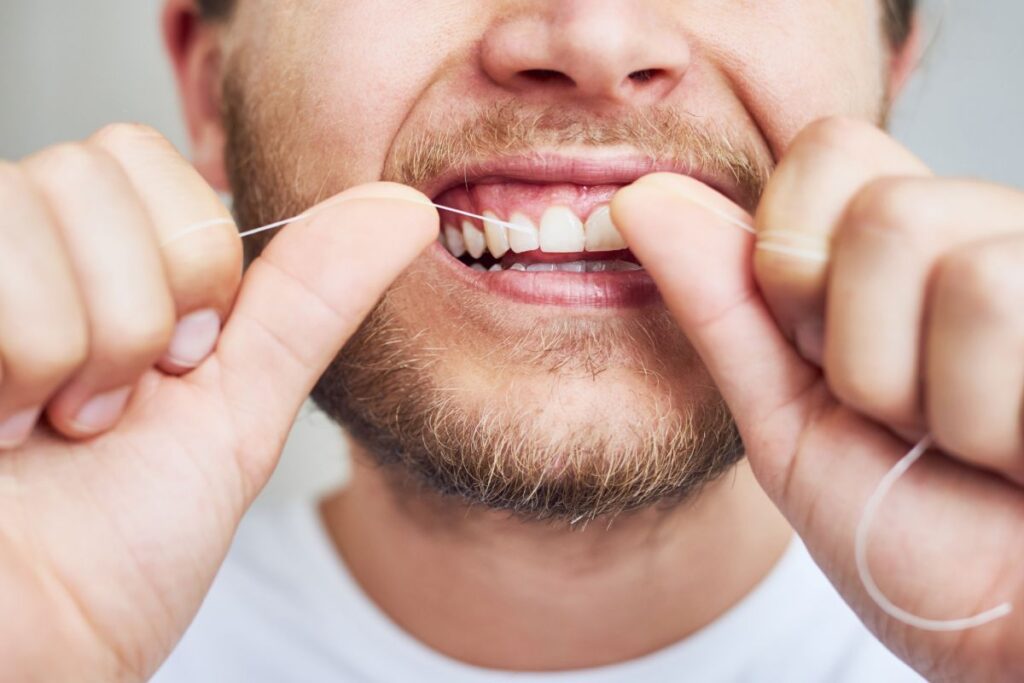
3. Place the floss between the teeth – the main goal is to reach the area where each tooth meets the gum line – a place that a toothbrush cannot reach. You can start with the central incisors and then move to the left or right. Move your fingers so that the part of the floss you will be working on the tooth with is in the shape of the letter "C". Thus, the most effective treatment of the surface of the teeth is achieved.

4. Move the thread up and down – this is the stage where the real work is done. Rub the floss up and down several times on both sides of the triangular area around the gums, which is called the papilla. Repeat this action as you move from tooth to tooth, using a clean section of floss for each tooth.
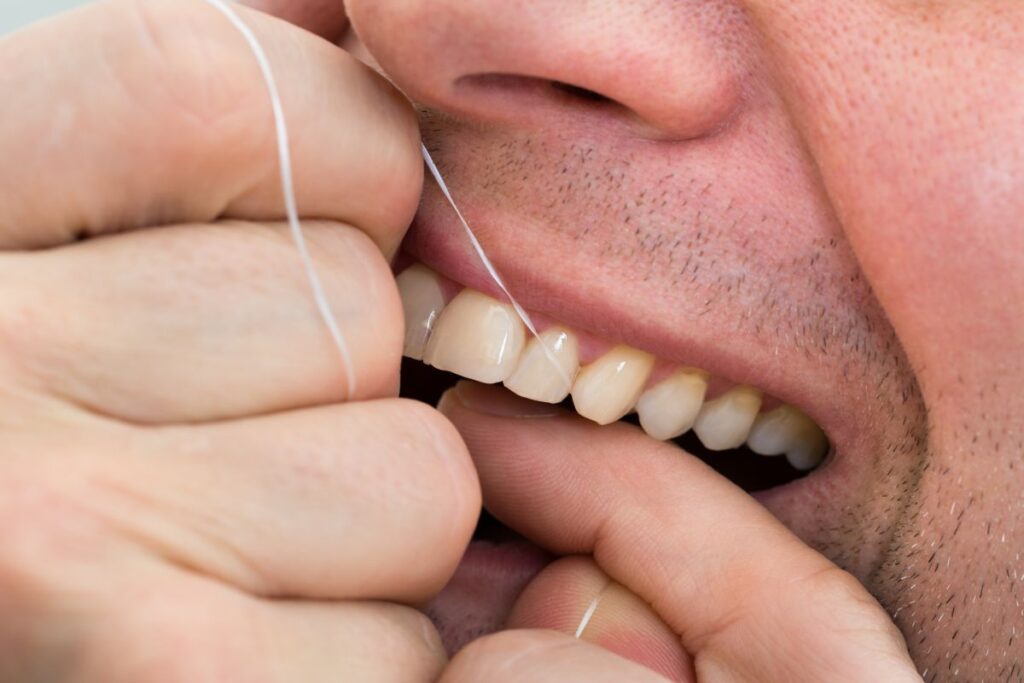
5. Be gentle and considerate – do not stick or press the floss into your gums as this can cause bleeding. Keep in mind that if you don't floss frequently, your gums may bleed even if you floss gently. In most cases, if you follow the proper technique, the bleeding will stop within a week. You just have to be careful not to traumatize the gum tissue and not to press too hard or at the wrong angle.

6. After you finish cleaning, rinse your mouth with mouthwash or plain water. In this way, you will clean even better the remains of plaque and food in the spaces between the teeth.

7. Ask for help – if you follow these steps but still aren't sure if you're flossing correctly, don't hesitate to seek professional help. The next time you go to your dentist for a check-up, ask him to demonstrate the correct brushing technique.

Why is flossing so important?
Good oral health is much more than a beautiful, white smile. Oral health is related to the health of the entire body. Problems with teeth and gums can lead to other health problems such as heart disease, diabetes, arthritis, lung disease, stroke and more.
Flossing is extremely important because studies show that brushes don't reach the hardest-to-reach places between the teeth. If the plaque there is not cleaned, it can lead to the development of caries, periodontal disease or both.
How often should teeth be flossed?
To maintain good oral hygiene, brushing at least twice a day and flossing at least once a day is recommended. Of course, if you have food stuck between your teeth, you can also floss after each meal.
We hope this article was helpful to you. If you need further information and instructions, do not hesitate to book an appointment for a review and consultation at Specialized dental clinic Bushkalova. Our specialists will show you clearly how to properly floss your teeth and maintain perfect oral hygiene.