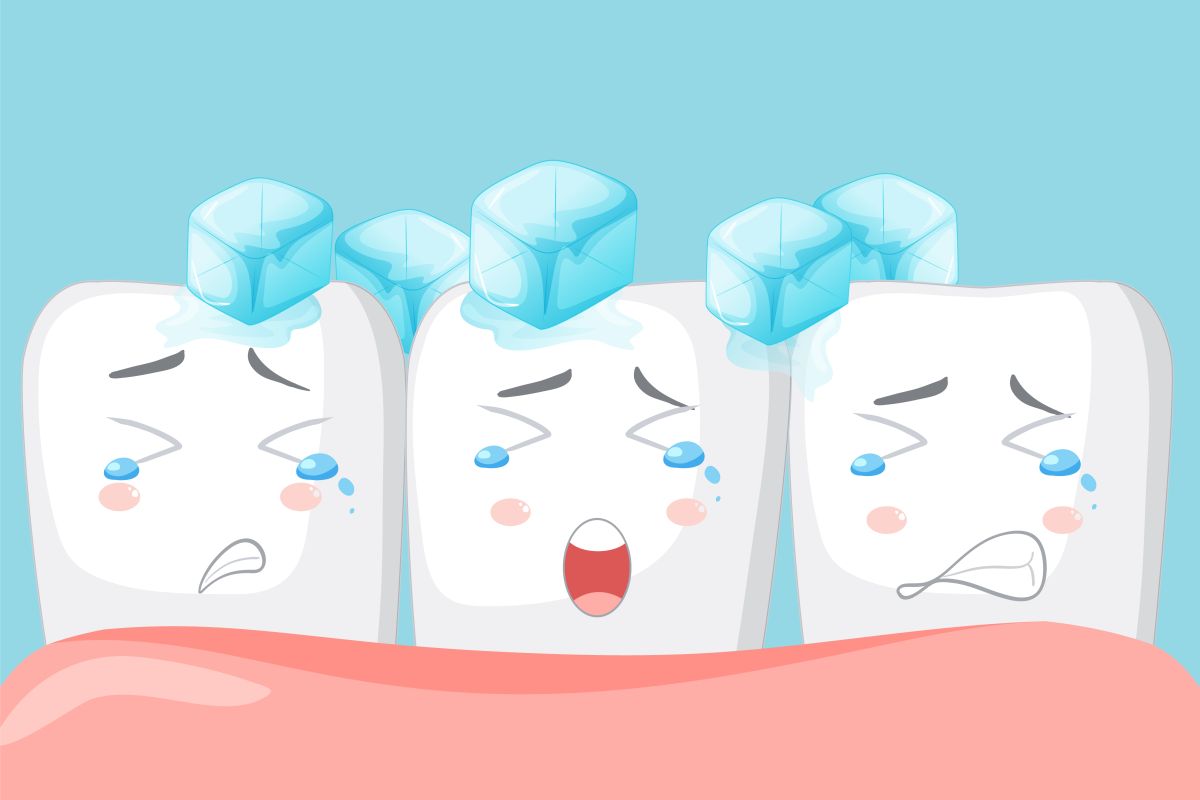
Tooth sensitivity usually occurs when eating cold, hot, sour or sweet foods and drinks. For some people with more sensitive teeth, even breathing in cold air causes pain. This pain is usually sudden and sharp because it comes from the nerve endings of the teeth.
Tooth sensitivity - What is it?
This condition is observed when one of the the inner layers of the teeth (dentin) are exposed. This usually happens when the gum is pulled back and the roots are exposed. The roots of the teeth, which are not covered with hard enamel, contain thousands of small canals leading to the center of the tooth (pulp). These canals, also called dentinal tubules, reach the nerve and that's where the pain we feel comes from. Sensitive teeth can also be a symptom of other dental diseases, such as tooth decay, cracked tooth, broken tooth or gum disease.

Causes of sensitive teeth
There are many factors that can cause it tooth sensitivity, but most often this is due to:
Brushing your teeth too hard – Vigorous brushing or using a hard-bristled brush can wear away the enamel and expose the dentin.
Receding gums – Some people are genetically predisposed to thinning gum tissue. In others, it is a result of periodontal disease. Eventually, receding gums expose the roots of the teeth.
Cracked teeth – Cracked or broken teeth are exposed to bacteria due to plaque build-up. The entry of bacteria into the pulp causes inflammation, and hence increased sensitivity.
Grinding teeth – Grinding and clenching your teeth wears down the enamel, which exposes the underlying dentin.
Age - People between the ages of 25 and 30 have the highest tooth sensitivity.
Plaque build-up – Plaque buildup on the roots also causes sensitivity.
Acidic foods – Regular consumption of highly acidic foods such as pickles, citrus fruits, tomatoes and tea can cause enamel erosion.
Recent dental procedures – They can cause temporary tooth sensitivity that usually lasts 4 to 6 weeks. It most often occurs after cleaning the teeth or when fillings are placed.
What can you do for sensitive teeth?
Use toothpaste for sensitive teeth - The brand you choose must be fluoridated toothpaste.
Maintain good oral hygiene – Learn the proper brushing and flossing techniques. Clean thoroughly and carefully all parts of the teeth and mouth. Use a toothbrush with soft bristles for less friction with the tooth surface and gum irritation.
Watch what you eat - the frequent consumption of highly acidic foods gradually breaks down the tooth enamel and exposes the dentin.
Use fluoridated dental products - daily use of fluoridated mouthwash can reduce tooth sensitivity.
Don't grind your teeth – if you grind or clench your teeth while sleeping, you may want to use a mouth guard.
Visit the dentist regularly - do not miss preventive examinations, professional cleanings and fluoride treatments.
If you perform the above points and the problem of tooth sensitivity does not resolve, you should consult a dentist. There are some dental procedures that help in such situations, such as:
- Bonding – thanks to the bonding, the exposed root surfaces are covered.
- Application of fluoride varnishes on an exposed root surface.
- Dentine celery – they are also applied to the exposed root surface.
Conclusion
Sensitive teeth can be the result of worn enamel, exposed roots, recent dental procedures, cracked or chipped teeth. Whether this problem needs treatment depends mostly on the original source. The mild form of sensitivity is overcome with better oral hygiene and the use of toothpaste for sensitive teeth. More sensitivity caused by receding gums, cavities or cracked teeth may require treatment. In such cases, the dentist is the one who knows the problem best and can recommend the best solution.